
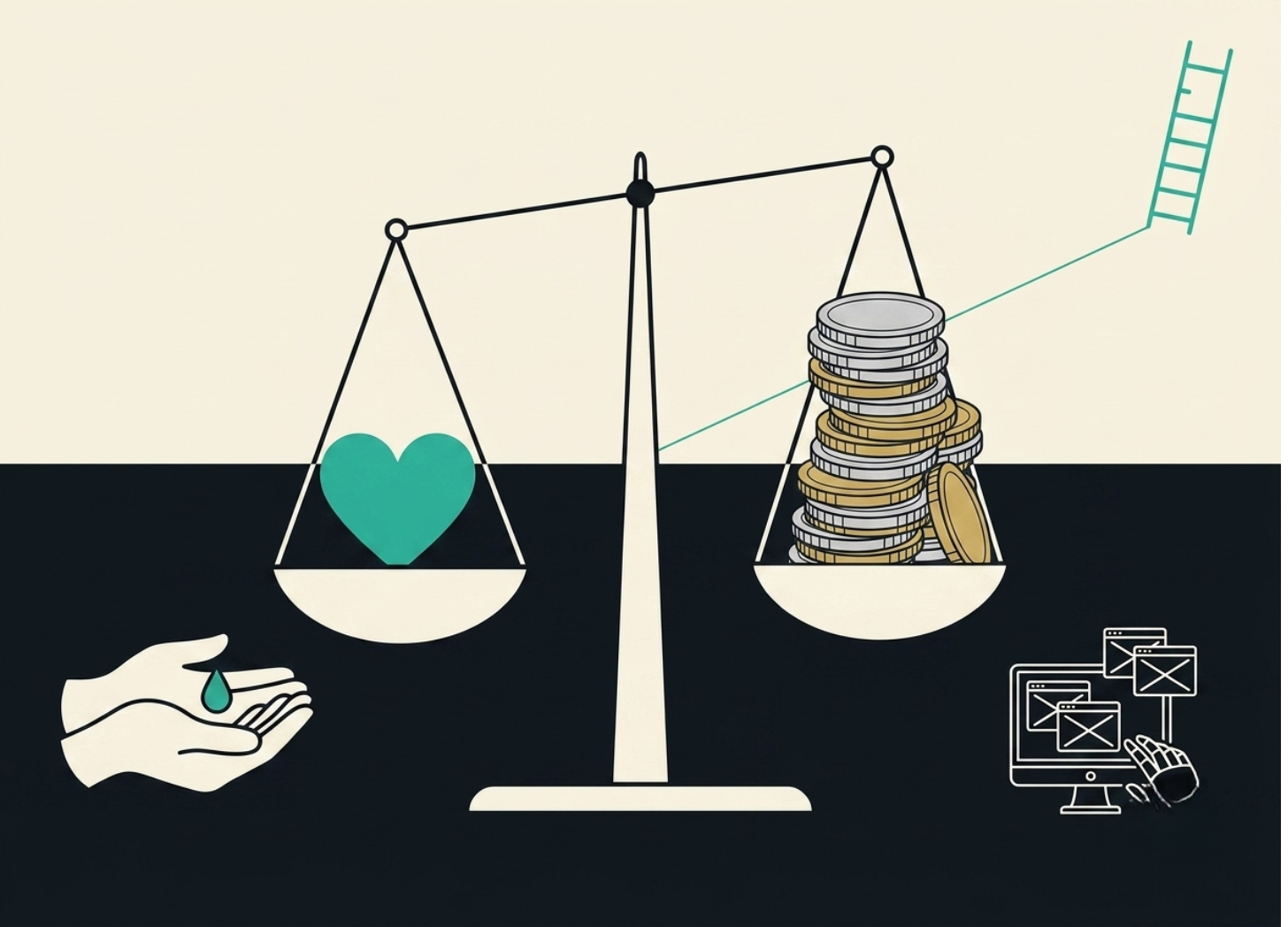
UK care workers on £13.51 an hour report higher job satisfaction than financial analysts on £65,000 and up. Not because poverty is pleasant. Because professional work has been systematically failing people on the things that actually make work sustainable, and low-paid care work meets those things almost by accident. A care worker can see their work mattering, in real time, in the face of the person they are helping. Most analysts cannot say anything like that about a Tuesday.
And I want to be careful here, because this is not an argument that care workers should be grateful for poor pay. Poor pay is a separate and real problem. The point is structural. The model that produced the highest nominal earnings produced the lowest satisfaction, and a system that manages that inversion is telling you something about itself.
We called it the knowledge economy. A more honest name would have been the orchestration economy. If you map a typical knowledge worker’s week, and I have sat with enough directors to have effectively done this, maybe 15 per cent of it involves genuine thinking. The rest is logistics wearing a white collar. Emails about meetings. Meetings about projects. Status updates on the status updates, and so on. David Graeber gave this a ruder name years ago, and the reason the term stung is that it was recognisable. The research on how many people rate their own jobs as useless is in the chapter, and the sectors topping that table are the ones we are currently trying hardest to protect.
The money was never quite what it looked like either. A couple in their late thirties, both in professional services, £130,000 combined, which sounds like comfort until you put the mortgage, the childcare, the season tickets and the rest against it and find out what is actually left at the end of the month. High earners living paycheck to paycheck, which sounds like a contradiction and isn’t. They could not have downshifted if they had wanted to. The golden handcuffs weren’t golden. Just handcuffs.
There is a forty-year-old piece of psychology that explains most of this, three basic needs that make work psychologically sustainable, and professional services was structurally starving people of at least two of them while telling them they just worked too hard. “They worked too hard” was the cover story. It preserved everyone’s dignity. The real diagnosis was more awkward, which is kind of why the profession never discussed it.
Now hold that against what AI is actually automating. It is not coming for the care, the craft, the trust-built relationships, the accountability. It is coming for the orchestration. The status reports. The 85 per cent that was logistics in a lanyard. Which means that the thing being displaced fastest is, in large part, the thing that was quietly making people miserable, and the work it cannot touch is the work that was always real. That is an uncomfortable thought to hold at the same time as real grief about real lost incomes, and I do hold both.
Chapter 16 takes this all the way through: what GDP was actually designed to measure in 1944 and the car-crash problem that follows from it, why the career-for-life was a fifty-year anomaly rather than a baseline, what the downshifters worked out early, and why the portfolio pattern most professionals are already quietly living is older and sturdier than the salaried model it is replacing. The £13.51 inversion is the way in. The rest of the argument is in the book.
This is from Chapter 16 of The Next Rung, my book on what AI displacement actually looks like from inside. It’s open for pre-order now: