
Nearly nine in ten organisations are now using AI in at least one business function. That is the number companies put on analyst slides. It is not the number that matters.
The number that matters comes from ISG, the Information Services Group: 31 per cent of use cases have reached full production, and that figure is doubling annually. “Full production” means the AI is not being tested. It is doing the work. Decisions flow through it. The people who used to do those tasks are doing something else, or nothing at all. Run the arithmetic on a doubling rate and you can see how long “most companies haven’t really adopted it yet” survives as a comfort.
So the question has already moved on. It is not whether your company uses AI. It is whether your company has been redesigned around it, and those are very different things.
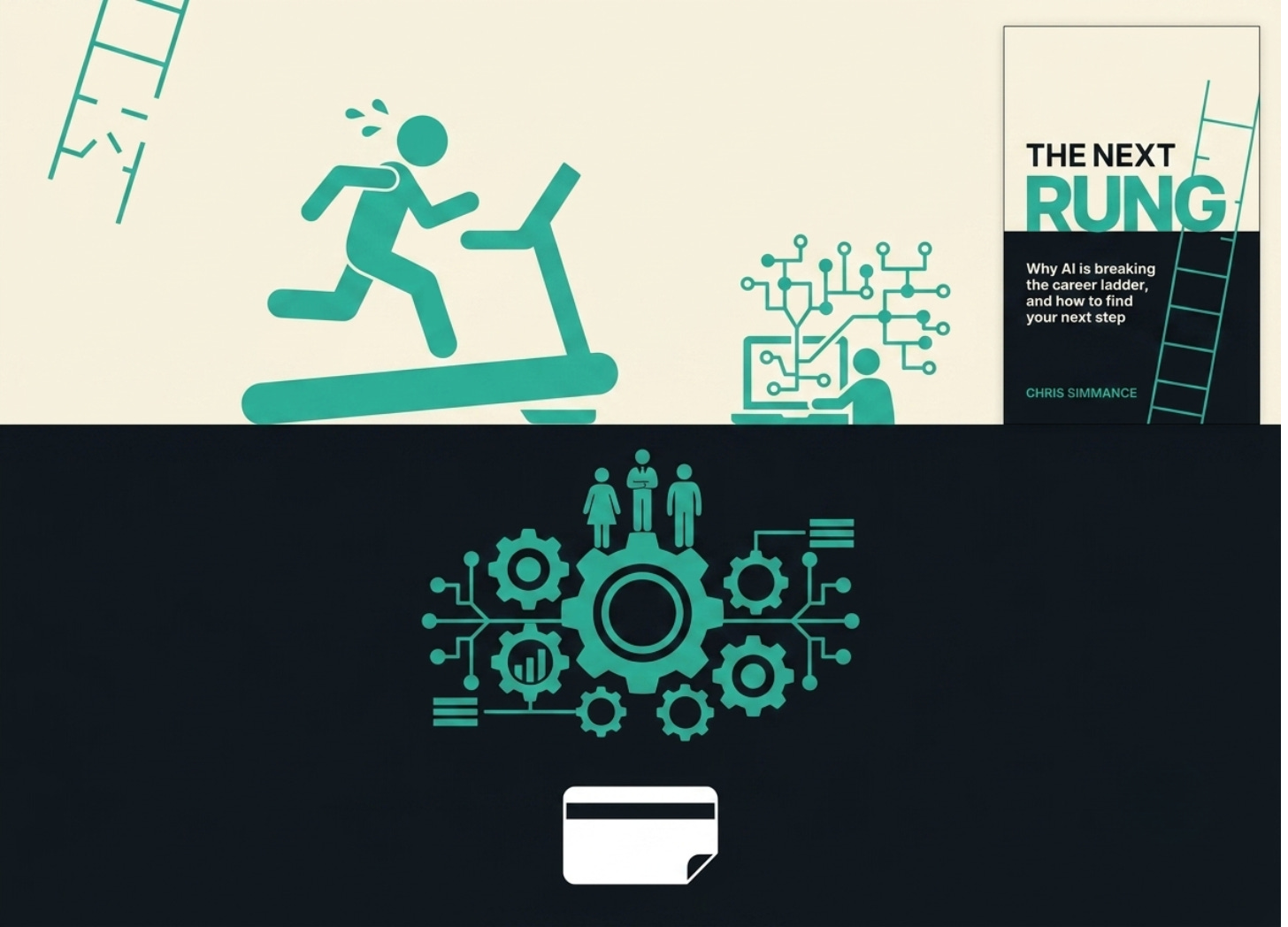
My advisory work lives inside that difference every week. The companies that have actually moved through AI, and implemented it into the orchestrational areas of the business, have org charts that look like a small group of very smart, very capable people sitting directly on top of the tooling. There are no juniors or middle people below them. There is nothing below them. The tooling does the work the juniors used to do.
And then there are the firms that ran a pilot and ended up with Copilot and ChatGPT bolted on to the old structure. They still have the junior staff, the middle managers, the pretty presentations. One shape is nimble and fast and smart. The other is performative.
Adopting AI is buying the gym membership. Redesigning around AI is actually going to the gym.
The firms I worry about most are not the big ones, who have the capital to transform, and not the AI-native startups, who never had to. It is the mid-market, the firms employing the bulk of the professional class. Too big to pivot fast. Too small to fund the transformation. In six advisory sessions in the last year I have heard some version of the same sentence: “We cannot afford not to do this. We cannot afford to do this.” Sit with that sentence for a minute, because a lot of businesses are currently living inside it, and the window for getting out of it is shorter than most of them think.
Chapter 6 of the book is about what happens when this pressure changes state. The chapter is called Critical Mass, and it goes through how these decisions actually get made behind boardroom doors before anything is announced, the sector sequence (legal first, then consulting, then accounting, and why in that order), and the moment when being excellent at your job stops being the thing that protects it. I won’t unpack all of that here. The short version is that the corporate world has been heating steadily for a while now, and water at 99 degrees is still water.
This is from Chapter 6 of The Next Rung, my book on what AI displacement actually looks like from inside. It’s open for pre-order now: