
“That would have taken my assistant half a day.”
I hear a version of that sentence most weeks. There is a specific moment that keeps recurring in my work, and I have started watching for it the way you watch for weather.
The setup is always the same. I am demonstrating Orca to a prospective user, usually a founder or a director. We connect their calendar. We pick a meeting from the following week. Orca generates the brief: background research, relationship history, CRM context, company data, preparation notes. The whole cycle takes less than a minute.
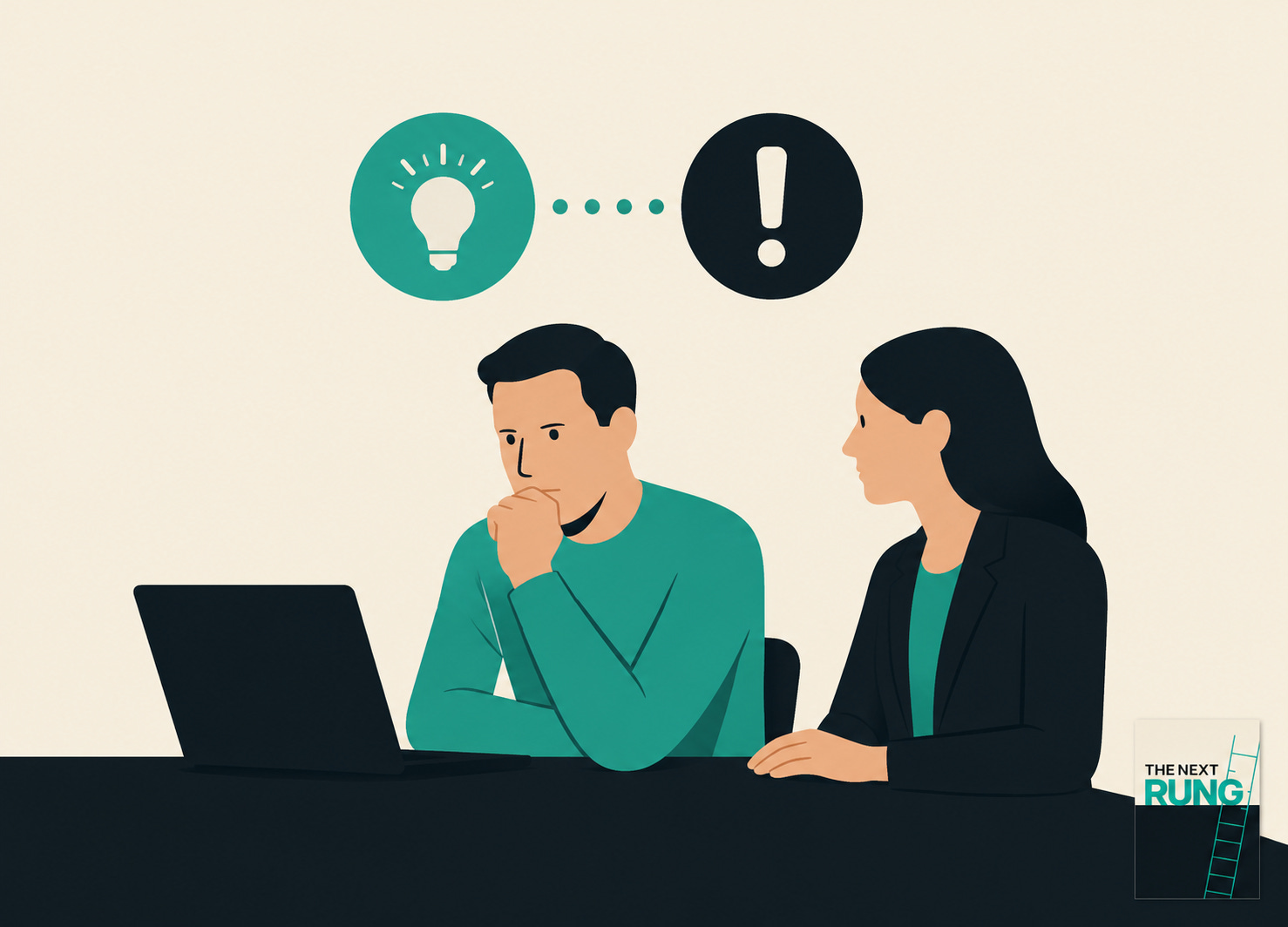
And then the person looks at the screen. They look at me. There is a pause. That is the aha moment, and it is the one every software demo in history has been built to produce. Lovely. Great for business.
It is what comes next that the book is about. Because after the aha, they say something. Sometimes it is the half-a-day line. Sometimes it is “I used to have someone doing exactly that.” And once, with the kind of uncomfortable honesty that arrives unexpectedly in a sales demo, it was a question about a real person on their payroll, by name. What she does now, once the tool does this.
That is the uh-oh moment. The aha is about the product. The uh-oh is about a person, and it usually arrives about four seconds later, which I think tells you something about how close to the surface this all is. People have already done the maths somewhere in the back of their head. The demo just makes them say it out loud.
I do not have a good answer to the uh-oh question, by the way. I want to be straight about that. What I have is a product that works, a business model that scales, and a growing understanding of what the efficiency I am selling adds up to across hundreds of founders. I wrote a whole post about the Sarah question a few weeks back, about what I actually say now when it comes up in the room, so I will not rerun it here.
What I want to flag instead is the pause itself. If you work in a support or orchestration role, someone may already have had this exact moment while looking at software that does a chunk of your job. They did not tell you about it. There was no announcement, because there is nothing to announce yet. Just a founder, a screen, and a pause. The uncomfortable truth is that the pause is where displacement actually starts, months before anything shows up in a spreadsheet.
The Prologue of the book is called The Builder’s Dilemma, and it lives inside that pause. The justifications I rotate through for building the thing, the conversation with an agency owner that would not leave me alone, where I land on the whole what-Amodei-said, what-Altman-said question. I have kept all of that for the book, partly for space and partly because it works better as one argument than as fragments.
But the demo moment you can have for free, because you should know it exists. Aha, then uh-oh. Less than a minute, then a pause. It is happening in meeting rooms all over the place, right now, and almost nobody in the roles being discussed knows the pause is about them.

This is from the Prologue of The Next Rung, my book on what AI displacement actually looks like from inside. It’s open for pre-order now: