
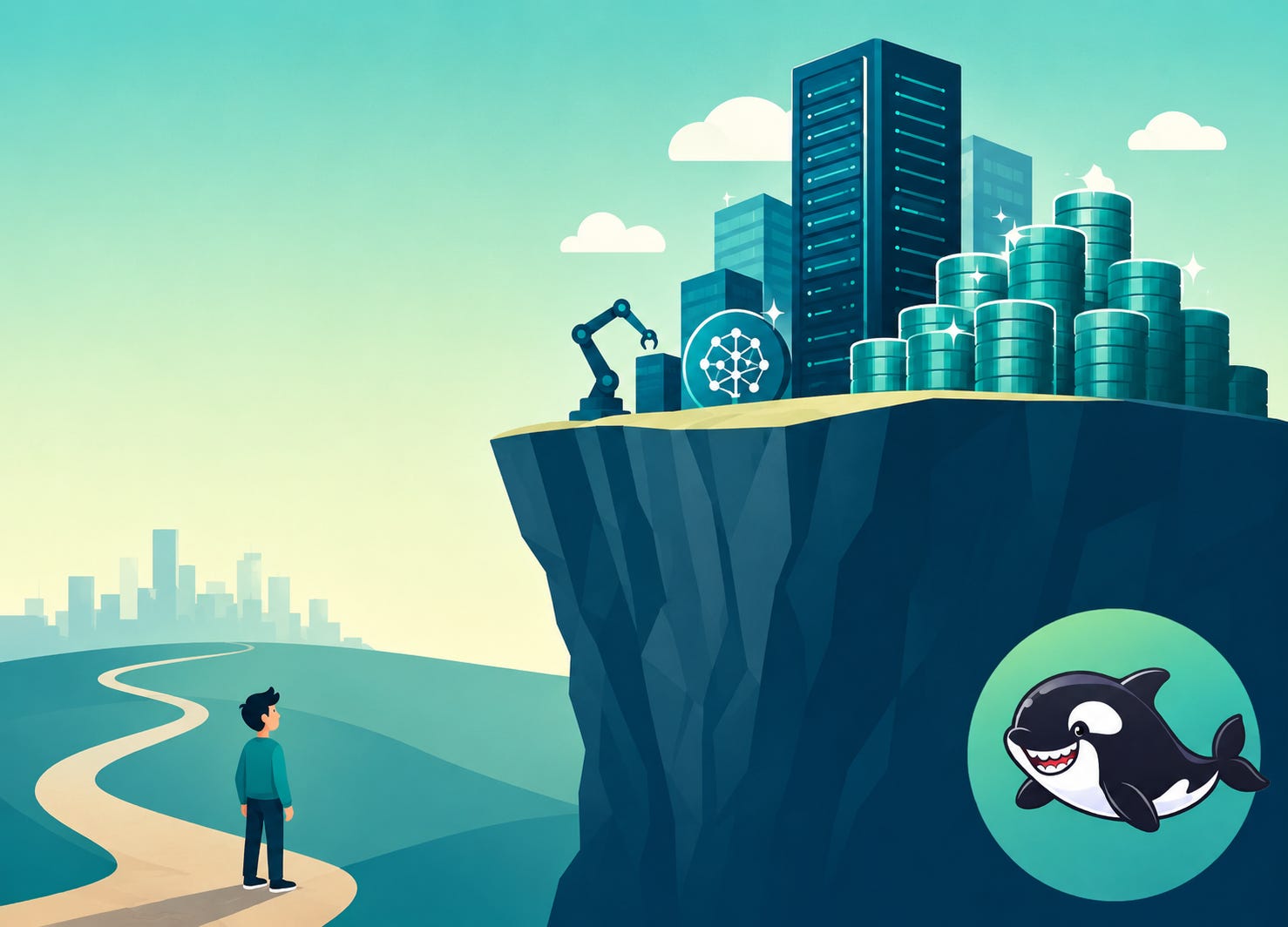
Anthropic’s latest funding round valued the company north of $900 billion. That puts it ahead of OpenAI’s $852 billion valuation. It makes Anthropic worth more than all but a handful of the FTSE 100. More than BP. More than Unilever. More than most of the companies that employ the people who read this newsletter.
I built Orca on Anthropic’s API. Claude is the engine. The company whose technology sits inside my product is now valued at a figure that most people cannot meaningfully visualise.
I am not complaining. The technology works. It is why I chose it. But the concentration of capital in AI infrastructure companies is not a side story. It is the story.
Here’s the thing. Chapter 10 of the book lays out what I call the J-curve. Productivity gains from a new technology follow a pattern: disruption first, then a trough, then a turn. The question is not whether the turn comes. It is who captures the surplus when it does.
Between 1995 and 2025, US labour productivity rose 65 per cent. Median wages rose 8 per cent. The productivity gains went somewhere. They went to capital. The J-curve turned, and the workers whose labour generated the productivity did not see the upside.
AI is accelerating this pattern, not reversing it. Anthropic’s $900 billion valuation is capital pricing in a future where a small number of infrastructure companies capture an enormous share of the productivity surplus that AI generates across the entire economy.
Which brings us to the part that actually matters.
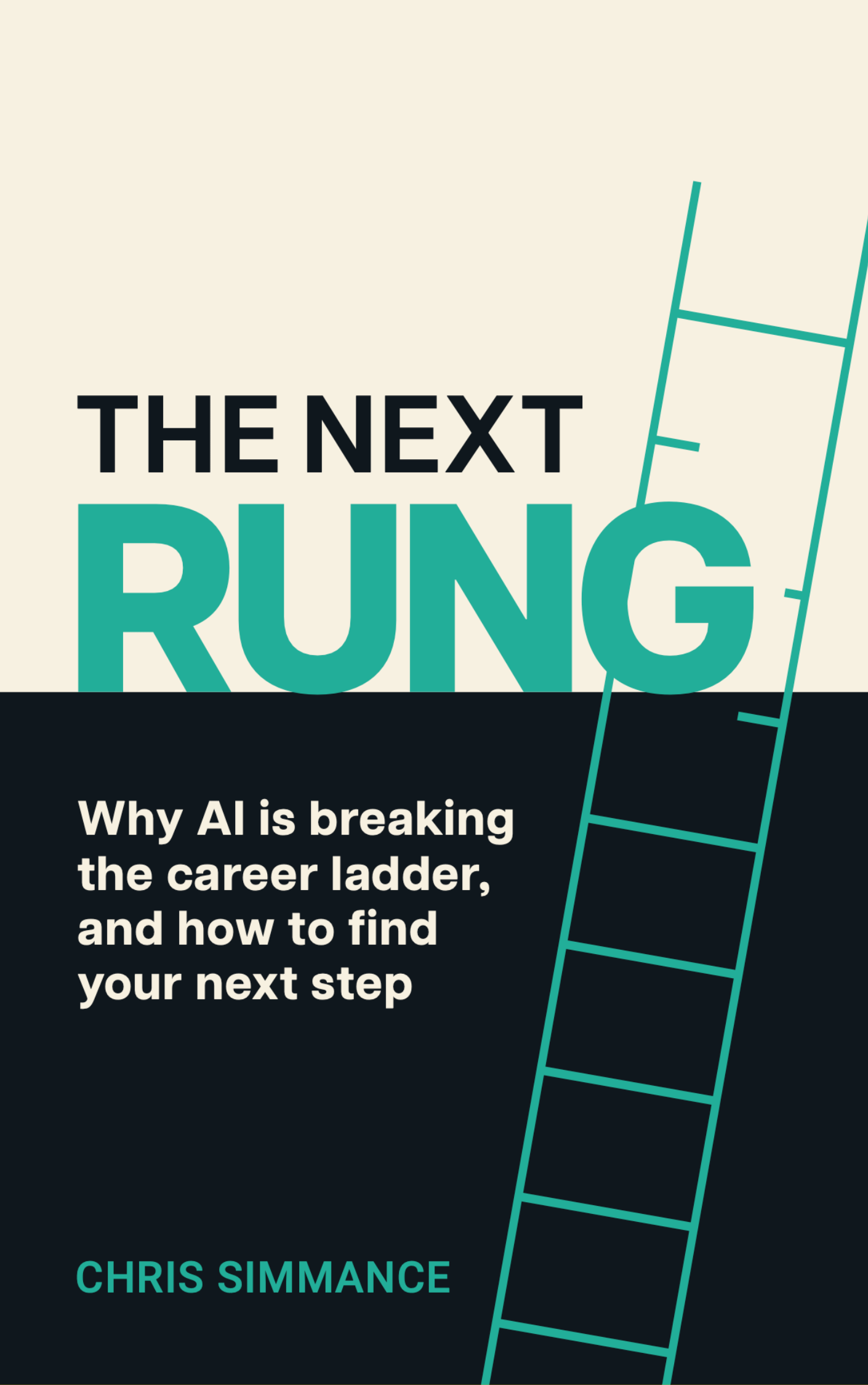
The Next Rung is a book on how AI is quietly dismantling the middle of knowledge work, and what you can do about it before the market decides for you: pre-order it before it publishes in January.
The Big Four tech companies, Alphabet, Microsoft, Amazon, Meta, are spending a combined $650 to $700 billion on AI infrastructure in 2026 alone. That is not investment in the sense that a factory is investment. A factory employs people in the town where it is built. AI infrastructure investment creates value that flows to shareholders, not to the displaced workers whose jobs funded the efficiency gains.
Chapter 17 of the book asks a question I keep coming back to. The most likely outcome if we do not make deliberate choices is not collapse. It is what I call neo-feudalism: a stable, unequal arrangement where the owners of AI infrastructure capture the surplus and everyone else adjusts downward. Not because anyone chooses it. Because it is the path of least resistance.
Neo-feudalism is the default because it does not require anyone to choose it.
Anthropic is not the villain of this story. Dario Amodei has been more transparent about the risks than most. The company publishes its safety research. It mapped 800 occupations and published the exposure data. I use the technology every day and I think the product is good.
But a company can be well-run, ethically serious, and still be part of a capital-concentration pattern that makes the world worse for most people. Those two things are not in conflict. They coexist quite comfortably, which is precisely the problem.
The Next Rung is a book on how AI is quietly dismantling the middle of knowledge work, and what you can do about it before the market decides for you: pre-order it before it publishes in January.
I write this as someone inside the contradiction. I pay Anthropic for API access. I charge clients for the product I build on top of it. The value chain works. It works for me. The question from the book is whether it works for the 3 to 4 million UK knowledge workers whose roles are being absorbed by the same technology.
The capital is pooling. The gains are concentrating. The productivity surplus is being captured before the trough has even bottomed out.
A $900 billion valuation is not just a number. It is a signal about where the economy thinks the value is going. And it is not going to the people reading this newsletter.
The book spends two chapters on this. Chapter 10 on the J-curve and the political question of surplus capture. Chapter 17 on what happens if nobody makes the choice. I wrote them a year ago. The Anthropic valuation did not exist then. The argument did not need it. But it is a decent illustration of the point.