

Fifty per cent of UK organisations have eliminated degree requirements from their job postings. That’s up 28 per cent year on year. Eighty-five per cent now say they use skills-based hiring.
The degree is a proxy. It always was. It told employers that a candidate could complete a three-year programme, write to deadline, absorb structured information, and function within an institutional framework. Those are useful signals. But they are signals about the ability to do orchestration work: synthesise, format, coordinate, report. When the work the exam selects for is the work the technology replaces first, the proxy breaks.
That line is from Chapter 13 of the book. It is, I think, the cleanest version of the argument I’ve managed to put on paper. The degree was never a measure of capability. It was a measure of the ability to do the kind of work that AI now does faster, cheaper, and more consistently than a graduate with a 2:1.
The 85 per cent figure sounds like progress. And in one sense it is. Skills-based hiring, done properly, opens doors that the degree requirement kept shut. It lets people demonstrate what they can actually do rather than where they sat for three years. The research backs this up: 94 per cent of employers using skills-based hiring report that those hires outperform degree-based ones. One case study showed a 340 per cent increase in the qualified applicant pool.
But there’s a catch. “Skills-based hiring” is a broad label that covers a range of practices from rigorous capability assessment to “we removed the degree box on the application form and didn’t replace it with anything.” The latter is not skills-based hiring. It’s credential removal without an alternative signal. And without an alternative signal, hiring defaults to network, familiarity, and gut feel. Which tends to reproduce the same outcomes the degree was supposed to prevent.
The replacement signal matters. This is where I have to declare an interest, because I co-founded a platform that measures it.
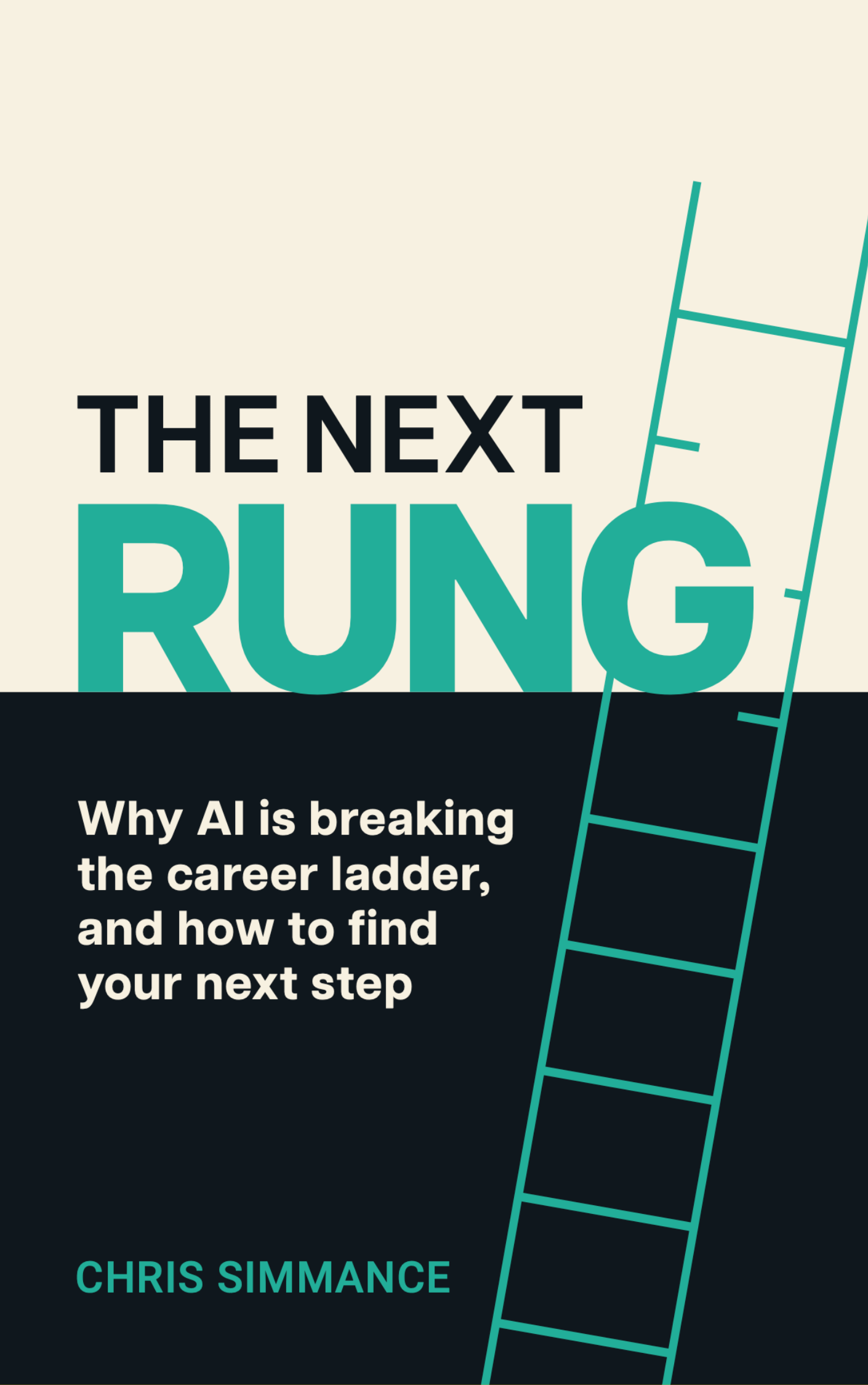
The Next Rung is a book on how AI is quietly dismantling the middle of knowledge work, and what you can do about it before the market decides for you: pre-order it before it publishes in January.
Enterprise Skills assesses eight workplace capabilities: commercial awareness, decision-making, problem solving, financial literacy, adaptability, data analysis, team collaboration, and leadership. These are underpinned by four traits that the book identifies as what survives AI automation: judgement, context, relationships, and ethics. The platform currently works in UK secondary schools and colleges, 50-plus schools, 630-plus students. The idea is that if the degree proxy is breaking, something needs to replace it, and that something should measure the capabilities that actually predict performance in a world where the orchestration layer has been automated.
I’m not pretending this is neutral observation. I built one of the tools I’m describing. The builder’s dilemma runs through everything I do: I’m writing a book about displacement and co-founded a company that measures the capabilities that displacement makes more valuable. The honesty is the position.
But the trend is real regardless of my involvement. Half of UK employers didn’t drop the degree requirement because of Enterprise Skills. They dropped it because degrees stopped predicting what they needed to predict. The signal degraded. A 2:1 in business studies tells you roughly as much about someone’s ability to solve a novel commercial problem as their A-level results did. Which is to say: not much.
The alternative credentials market is projected to reach $300 billion globally by 2030. Micro-credentials, digital badges, portfolio assessments, skills passports. The infrastructure is being built. The question is whether it measures the right things or just creates a new set of proxies that will break in their own way.
The Next Rung is a book on how AI is quietly dismantling the middle of knowledge work, and what you can do about it before the market decides for you: pre-order it before it publishes in January.
Chapter 13 of the book goes into the design choices. Recency-weighted scoring, because a capability demonstrated last month matters more than one demonstrated two years ago. Zeros count, because not attempting something is information. Scope qualifier always present, because “leadership” at a school project level and “leadership” at a department level are different claims. These aren’t academic distinctions. They’re the difference between a credentialing system that works and one that becomes the next degree requirement: a box to tick rather than a capability to demonstrate.
Fifty per cent is a tipping point. When half the market has moved, the other half follows or gets left with a shrinking talent pool. The degree isn’t dead. It’s just no longer sufficient. What replaces it will determine whether the skills-based hiring movement opens doors or just changes which doors are shut.