
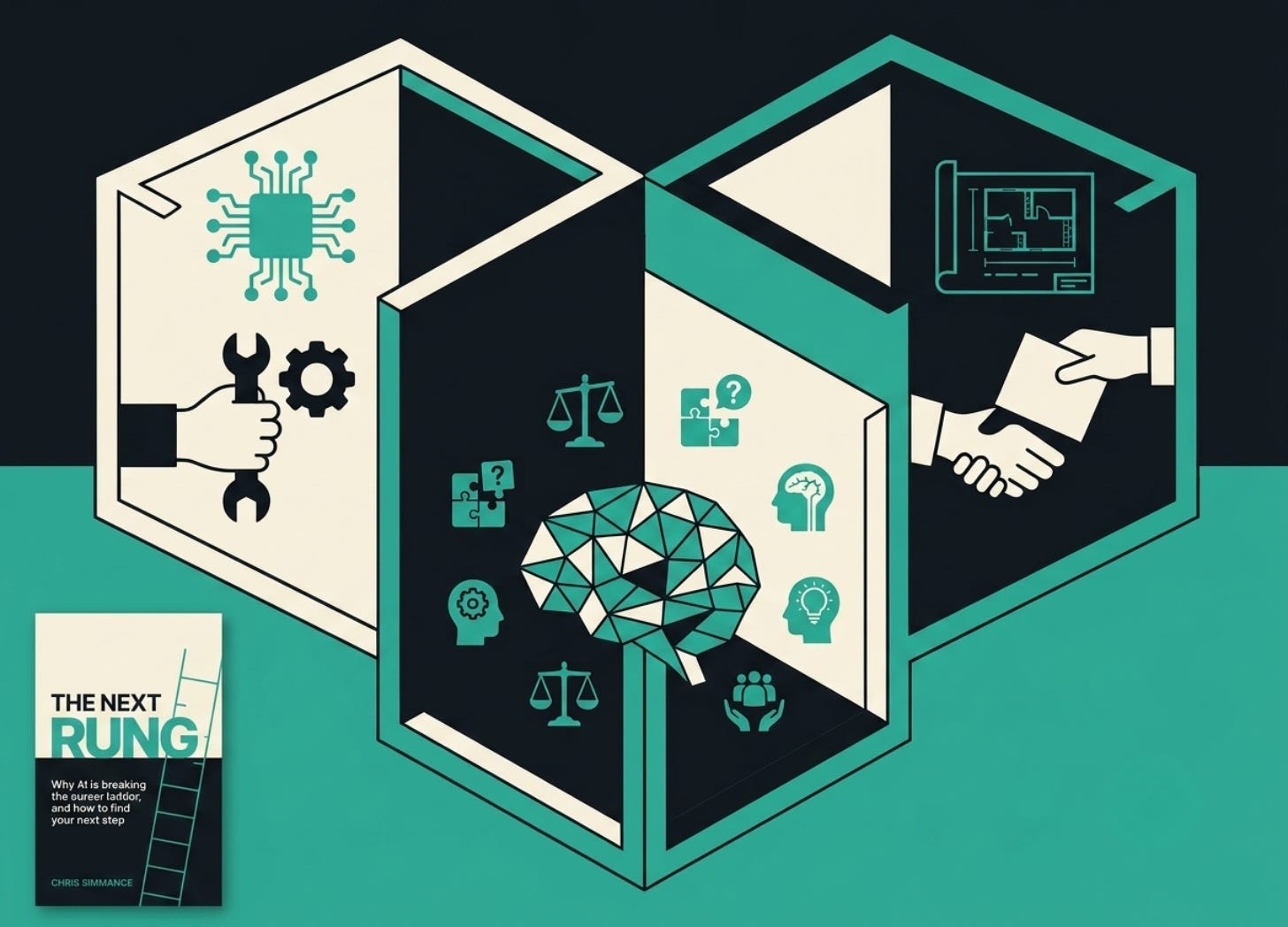
I am building the tools that do the displacing.
That is the first line of the book, and I put it first because you deserve to know it before you decide whether to read anything else I write. In any given week I sit on three sides of this problem. Not in theory, not as a thought experiment. In my actual diary, between actual meetings, with actual people whose working lives are being reshaped by the things I build.
The first hat is Orca, an AI executive chief of staff. It handles the admin and orchestration work that used to require a small support team around a single founder. I have written before about what that does to hiring, so I will not repeat it here, but the short version is that the support roles stop being created.
The second hat is the one people forget. I co-founded Enterprise Skills and built Skills Hub, an EdTech platform that measures the eight workplace capabilities AI does not replicate. Commercial awareness, decision-making, problem solving, and so on down the list. I designed and built it end to end and have since left the business, though it still runs on what I built. The thesis behind it is that the qualifications schools currently measure are becoming weaker signals every year, while the human capacities they do not measure are becoming priceless.
The third hat is advisory. Business owners, mostly agency founders and SME directors, strategy and operations. Increasingly those conversations are about AI. And increasingly they end with the same conclusion: you need fewer people. I do not enjoy saying that sentence. I have stopped pretending it is not the sentence.
So that is the geometry. I build the thing that removes the work, I built a thing that measures what the work leaves behind, and I sit with the people deciding when to pull the trigger. One recent conversation, with an agency owner who has spent fifteen years building her team and went to one of their weddings, is in the Prologue in full. I am not going to retell it here, partly because it deserves the space the book gives it, and partly because it still sits a bit heavy, if I am honest.
Why lay all this out? Because most books about AI and work are written from one side. The optimist side, usually, or occasionally the doom side, and almost always from a distance. This one is written by someone who profits from the displacement, worries about it, and advises through it, all in the same week. I get to be both the disease and the treatment, and whether that is a defensible position is a question I have not finished answering. The Prologue is called The Builder’s Dilemma for a reason. It also covers what Amodei and Altman have each said about the scale of this, and why one of their framings bothers me a lot more than the other.
If you have ever wondered whether the people building these tools know what they are doing to the job market, the answer is yes. We know. This book is what one of us decided to do about knowing.

This is from the Prologue of The Next Rung, my book on what AI displacement actually looks like from inside. It’s open for pre-order now: