
A piece I published on LinkedIn recently landed harder than I expected.
The argument was simple. Most knowledge work consists of tasks that can be set up inside a forty-minute window with current AI tools, and once they’re set up, they keep running. Forty minutes of human attention to absorb the work of a salaried role. That’s the moment.
The reaction in my inbox split cleanly into two camps. The first wrote some version of“this is what I’ve been trying to explain to my boss”. The second wrote some version of“fine, but how do I know if this applies to me, specifically, today, in my job”.
Both were the right reaction. The article makes the case in general. The general case is what books are for. But people don’t lose sleep over the general case. They lose sleep over the specific one. Their week. Their salary. Their mortgage. Their kids’ GCSEs.
So I built the specific version.
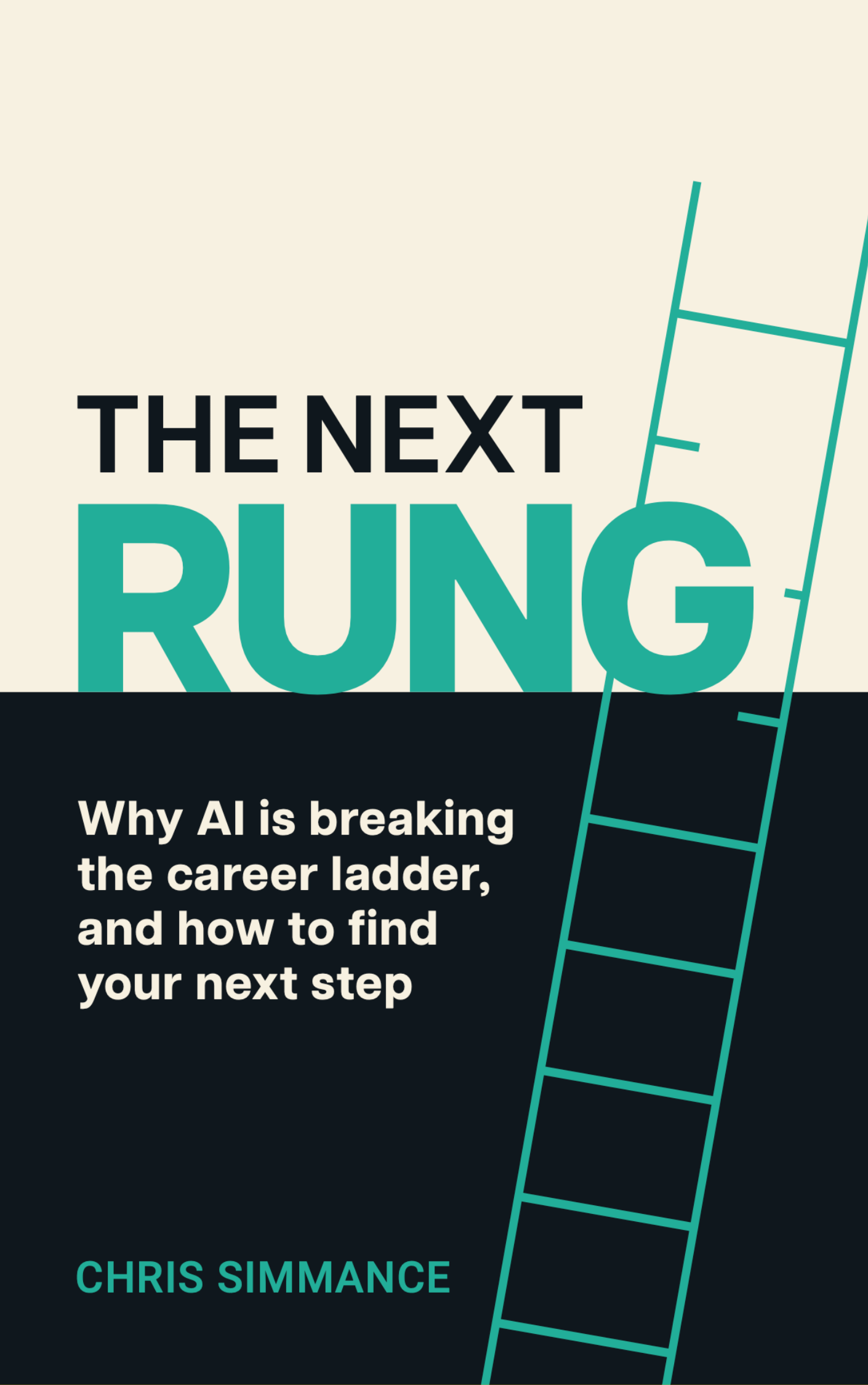
The Next Rung is a book on how AI is quietly dismantling the middle of knowledge work, and what you can do about it before the market decides for you: pre-order it before it publishes in January.
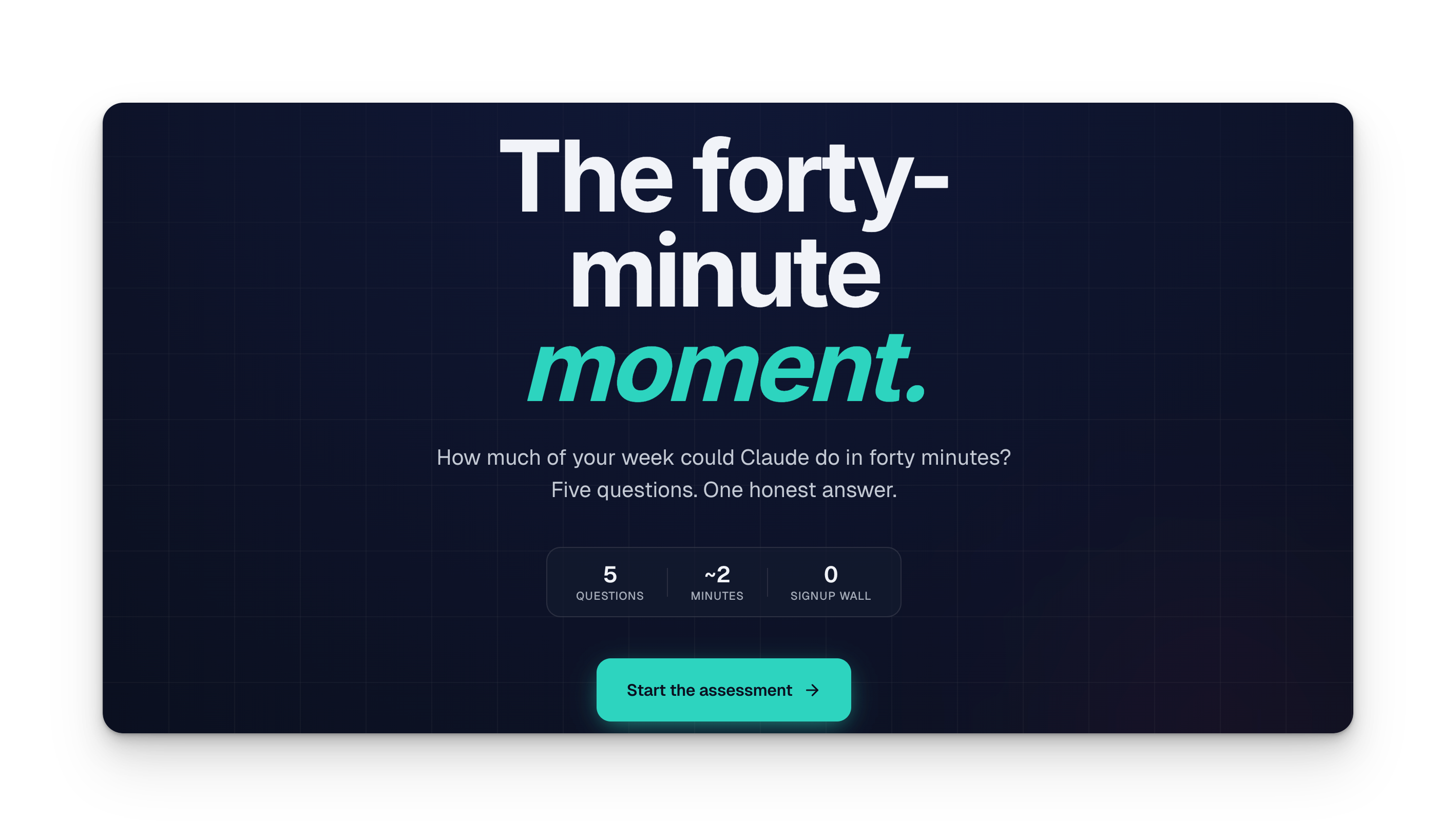
It’s at simmance.ai/forty-minutes and it’s free. Five questions, no email required to see your result, no signup wall before you get the number. The form asks how many hours a week you spend on five categories of work: meeting prep, recurring reports, inbox triage, summarising information, and scheduled admin. Then it asks for your annual salary so it can convert hours into pounds. Two minutes, tops.
The output is four numbers. Hours a week of your job that current AI could absorb. Days a year that adds up to. Pounds a year that adds up to. The percentage of your working week sitting in the automation window right now.
Then a one-line interpretation depending on which bracket you land in. Low, medium, high, or extreme. The interpretation isn’t a verdict. It’s a starting point.
A note on the coefficients, because this is the part I want to be honest about. The tool applies a percentage to each category representing how much of that category is currently automatable at the capability level of Claude as of April 2026. Meeting prep is at 60 per cent. Recurring reports at 70. Inbox triage at 45. Summarising at 65. Scheduled admin at 40. These are conservative numbers, and they are deliberately conservative. I would rather a journalist test the tool in public and find that the number is too low than too high. The actual capability ceiling is higher than the coefficients suggest. Treat the result as a floor, not a ceiling.
The Next Rung is a book on how AI is quietly dismantling the middle of knowledge work, and what you can do about it before the market decides for you: pre-order it before it publishes in January.
A few things the tool will not do.
It will not tell you to quit your job. It will not tell you to retrain. It will not tell you which AI to buy or which course to take. It will not tell you that everything is fine, and it will not tell you that everything is over. Those decisions belong to you and the people in your house. The number is just a number. What you do with it is the work.
Who is it for. Anyone who has ever opened their bank app on a Sunday evening and felt their stomach tighten. Anyone whose job description has the words “co-ordinator”,“manager”, “assistant”, “analyst”, “specialist”, or “executive” in it. Anyone whose week is mostly meetings and writing and replying. Anyone whose partner has recently asked them, in that careful tone, what they think the next ten years look like.
If you fall into any of those categories, the calculator was built for you. If you don’t, send it to someone who does.
A practical suggestion. Don’t take the test on your phone in two minutes between meetings. Sit down with a cup of tea, close the door, do the five questions properly. Be honest about how much of your week is the things on the list. Most people underestimate their inbox time and overestimate their meeting prep, so sense-check yourself. If you have a calendar app open, scroll back two weeks and count.
Then, and this is the bit that matters, share the result with one person. Not on LinkedIn, not on Twitter. One specific person who needs to know. Your partner. Your manager. Your mentor. The conversation the result starts is the actual product. The number is the excuse to have it.
The newsletter unpacks what to do next. The book in December goes deeper. The tool is the front door.
One more thing. If the result lands in the high or extreme bracket and your stomach drops, that’s a signal worth sitting with for an hour. Not panicking. Sitting with. The people who do best in transitions like this are the ones who let themselves feel the size of the question before they start answering it. The people who do worst are the ones who close the tab, refresh LinkedIn, and tell themselves they’ll think about it next week.
Try it: simmance.ai/forty-minutes
Tell me what you got. Reply to this email or comment below. I’m collecting patterns and I’ll write a follow-up in a fortnight when I have enough results to see the shape.
Chris
Five questions. Two minutes. One honest answer. No email required to see your result. The follow-up analysis lands in your inbox if you subscribe.