
If you’re a financial adviser, or a solicitor, or you work anywhere near compliance, you’ve probably got a sentence you say to yourself when this subject comes up. Something like, well, it’s regulated. Somebody has to be accountable. The FCA isn’t going to let a chatbot tell someone what to do with their pension.
I get that sentence. I hear it a lot, and it isn’t daft, regulation does do something. It just does a lot less than people are counting on it to do.
A few weeks ago the FT reported that HSBC was planning cuts right across its UK wealth business. A big chunk of the management and specialist roles, apparently, and financial advisers reduced by up to around seventy per cent. Picture a team of ten advisers and three of them still there at Christmas. One person who’d seen the plans described them as deep, wide and brutal, and the people affected were expected to leave at the end of October. HSBC hasn’t confirmed the numbers, to be fair to them, it said it was evolving to deliver more digitally enabled products and journeys, which is the kind of thing a bank says. But think about what financial advice is in this country. Qualifications, FCA authorisation, suitability reports, the lot. It’s about as regulated as work gets. And the cuts went ahead anyway.
The regulation governs whether the advice is suitable and who’s on the hook if it isn’t. It has nothing whatsoever to say about how many humans sit behind that.
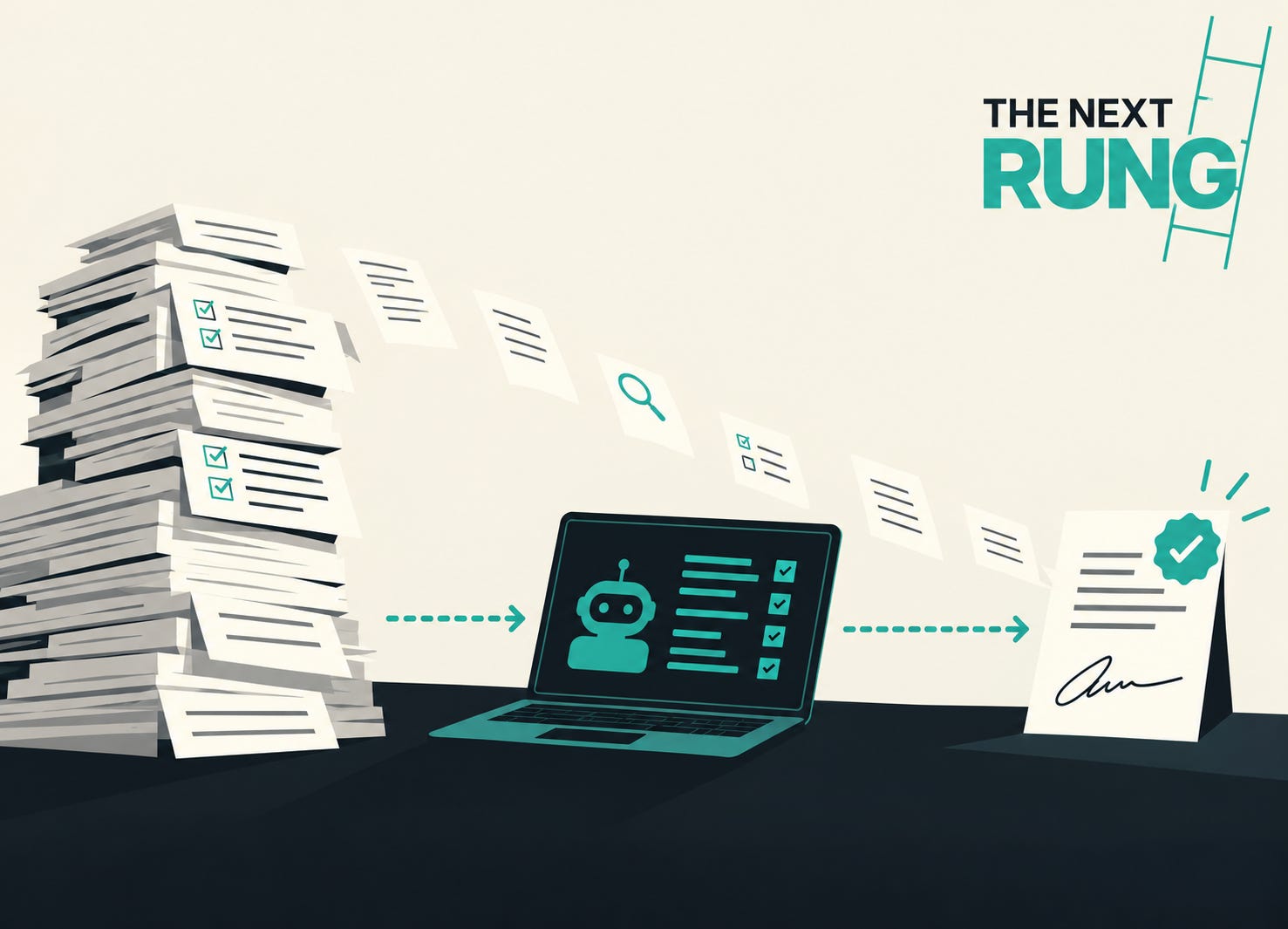
Which means that the thing you’re leaning on protects the signature. The bit at the end. And if you actually sat down and timed the signature, I think most people would be a bit embarrassed by how small it is next to everything that leads up to it.
In the book there’s a couple called Tom and Priya, who are a composite in chapter 7. Priya’s a paralegal doing commercial property conveyancing, and her work gets absorbed, and nobody breaks a single rule while it happens. Because conveyancing is mostly rules. Searches, checks, forms, does this match that, is this signed, is that dated, has the other side come back yet. Following rules is the thing these tools are genuinely best at, and compliance is rules. I keep coming back to that, compliance is rules, and the more of your week is rules the more of your week is exposed, regulated or not. Paralegals sit in the first tier of exposure in chapter 3, the one that’s already happening, and they work in one of the most regulated professions we’ve got.
The regulators aren’t standing in the doorway either. The SRA authorised Garfield.Law in May 2025, an AI-driven law firm, the first one, regulated like any other firm. The FCA runs an AI Lab and talks openly about supporting firms to adopt it safely. Which is what you’d want from a regulator, honestly. They’re busy writing the rules for how it gets used, and that’s a long way from stopping it being used. I’ve yet to see a bank’s cost-cutting programme stopped by a suitability report.
Does regulation slow it down? Yes, probably. A couple of years in some places, maybe longer in health and in anything criminal, I’d guess. That’s real time and I wouldn’t wave it away. But slower and never are different things, and most people are privately budgeting for never.
The one bit I’d genuinely give the regulated professions is the signature itself. Someone does have to be accountable. Someone does have to be struck off when it goes wrong, and a machine can’t be struck off. I think that survives, actually, probably for a long while. Whether it survives as a full-time job or as twenty minutes at the end of somebody else’s afternoon, I don’t know, and from the conversations I’m having I don’t think the firms know yet either.
What I do know is what’s going on either side of it.
(For the record, the exposure tiers are in chapter 3 of my book, paralegals included. The Next Rung, paperback, Practical Inspiration Publishing, 19 January, thenextrung.co.)
So list the regulated steps in your week, and next to each one write down who signs it off. Then count the hours either side of the signature.

The Next Rung is a book on how AI is quietly dismantling the middle of knowledge work, and what you can do about it before the market decides for you: pre-order it before it publishes in January.