

The timeline is phased. The first phase is quiet and already underway. The second phase breaks. The third phase reshapes. You need to understand the shape of all three because what you do now determines your position in all three.
Phase One, 2026-2028, is the quiet squeeze. Hiring freezes in knowledge work sectors. Contractor positions disappearing. Quiet restructuring that doesn’t show up in headlines because HR departments know the labour market is watching. Real unemployment rises while official figures stay flat because people leave the job market entirely rather than accept precarious work. The people in exposed roles start to notice that the stability they expected isn’t coming. The political class hasn’t developed a coherent response yet because the crisis doesn’t feel urgent if you’re not the one being squeezed. This phase feels like a normal downturn. It isn’t.
Phase Two, 2028-2032, is the breaking point. Enterprise AI adoption reaches critical mass. Competitive pressure forces the holdout companies to adopt. The pace of displacement accelerates past the pace at which retraining or natural job transition can absorb it. Housing markets face pressure as people who expected to service 25-year mortgages lose income. Political systems strain. The gap between “this is a technical transition” and “this is a systemic crisis” becomes impossible to deny. Unemployment peaks. Political systems are forced to choose between managed transition or something worse. This is the phase where institutional responses are determined. The choices made here, whether to tax AI gains or let them concentrate, whether to fund retraining or assume the market will sort it, whether to expand the social safety net or leave it where it is, those choices determine which scenario unfolds.
Phase Three, 2032-2040, is the reshaping. Whatever institutional response emerged in Phase Two plays out at scale. Managed Transition looks like the post-war settlement being rebuilt at higher velocity. Neo-Feudalism looks like the slow consolidation of the extractive model. Fragmentation looks like separate regions pursuing incompatible strategies producing unexpected interactions. The black swan, if it hits, makes everything unpredictable. But by 2032, the main direction is set.
The window for influencing this is open now and closes around 2032. Not absolutely. Politics can surprise. Crises can force rapid reversals. But the window for voluntary transition, for policy made in calm rather than panic, for solutions chosen rather than imposed, that window is roughly six years wide. After that, the structural decisions have been made and the space for modification narrows sharply.
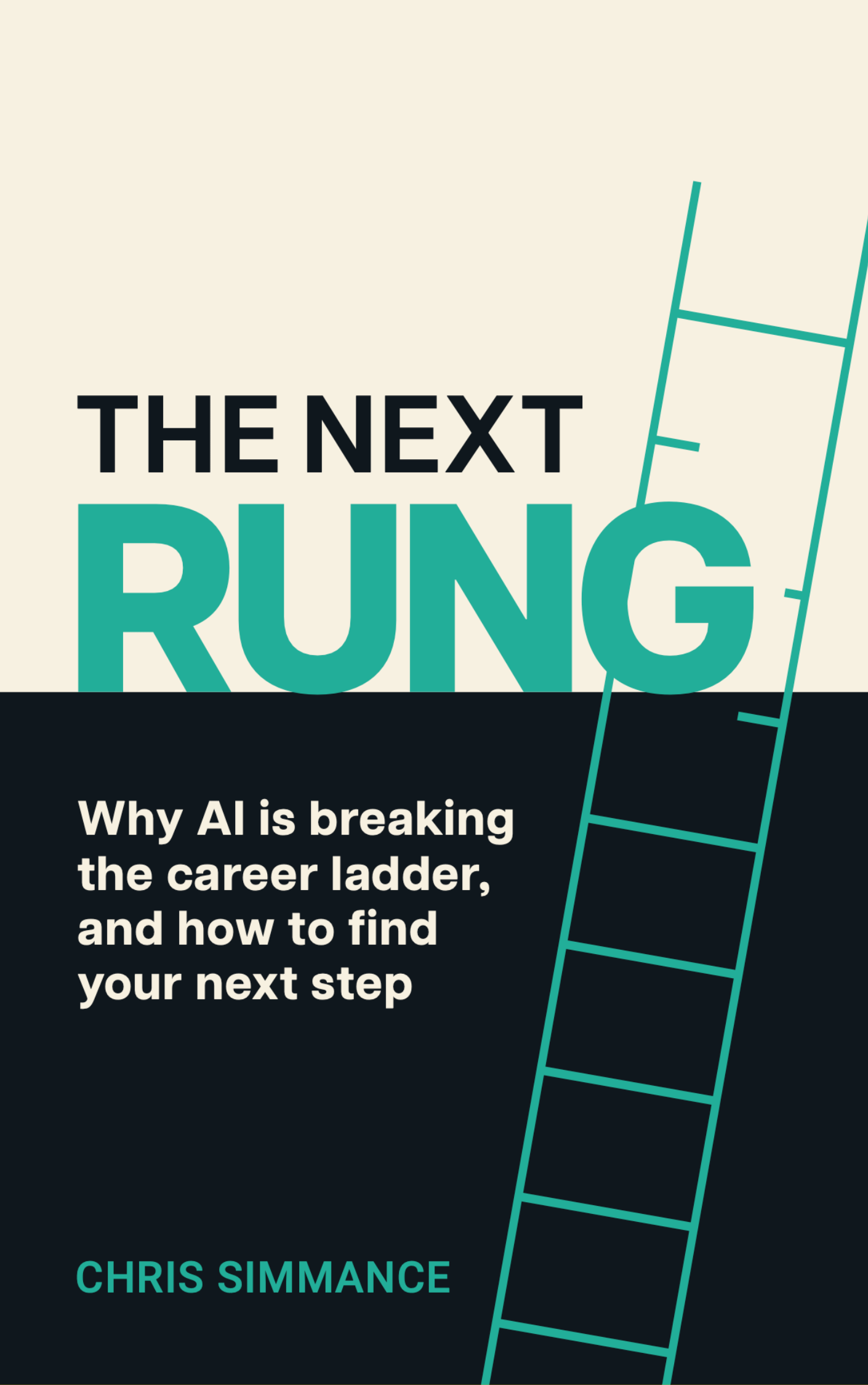
The Next Rung is a book on how AI is quietly dismantling the middle of knowledge work, and what you can do about it before the market decides for you: pre-order it before it publishes in January.
Here is what I think we do with that window.
First, demonstrate that managed transition works at scale. The evidence from pilots is clear: UBI doesn’t cause work participation to collapse, retraining works when funded properly and taken seriously, people respond to genuine opportunity. But pilots don’t move political systems because pilots are small and expensive and can be dismissed as unrepresentative. What moves political systems is scale demonstration: a city, a region, implementing genuine managed transition policies and showing outcomes. If even one major economy implements something close to managed transition and the results are decent, the probability of other economies adopting increases. If none do, the path toward neo-feudalism becomes harder to contest.
Second, rebuild the connection between productivity and wages. For 60 years after the Second World War, productivity growth and wage growth tracked together. Since the 1980s, they’ve diverged. Productivity up, wages flat. That disconnect is not a law of nature. It’s a policy choice, or more accurately, a policy non-choice: the absence of mechanisms that would force productivity gains to translate into wage gains. The mechanism exists. It’s called taxation and redistribution. Implementing it is not economically impossible. It’s politically contested. Demonstrating that it’s possible, that you can have high productivity and shared gains simultaneously, is the necessary precondition for the policies that enabled it post-war to seem non-radical now.
Third, protect the people in the blast radius through the transition period. The displacement isn’t happening to everyone simultaneously. It’s happening to orchestration-heavy roles first: coordinators, analysts, junior consultants, middle managers, marketers focused on process rather than strategy. These are the people with mortgages, kids in school, the lowest tolerance for income shock and the highest political voice. The people who can articulate what’s happening and demand response. If these people are left to fend for themselves, the political response will be chaos. If they’re supported through the transition, the response can be managed. The difference is not charity. It’s structural stability. You don’t let the politically articulate middle class fall into precarity without consequences. Those consequences are bad for everyone.
Fourth, invest in the capabilities that survive. AI automates pattern-based, documentation-heavy, coordination-heavy work. It doesn’t automate trust, genuine problem-solving, human relationships at scale, creative work where originality is the product, skilled trades with physical presence, care work. The education and training infrastructure should reflect this. Teaching people to code is not the solution because most of those coders are not going to be hired; the competitive supply of code-writers will exceed demand. Teaching people genuine problem-solving, communication, the ability to navigate ambiguity, relationships and trust-building, those investments do translate into resilience. The system that measures this is Enterprise Skills at K12 level, but the principle applies across the lifespan. Invest in human capabilities that an algorithm can’t replace. Don’t invest in the illusion that tech skills will save you.
Fifth, maintain optionality. The scenarios are not precise. Nobody knows exactly how this plays out. The people and institutions that survive are the ones with enough flexibility to respond when the actual future arrives. Don’t optimise for one scenario. Build resilience. Diversify income, skills, relationships, assets. Have multiple plans, not one plan with contingencies. The worst position you can be in is locked into one future with no ability to adapt. The best position is flexible across scenarios.
Those five aren’t complete. They’re the places where the window is open and closing fastest. They’re also the places where individual action and institutional action reinforce each other. If you build a diversified, resilient working life, you create demand for education systems that teach resilience. If you invest in trust networks and community, you create the social infrastructure that managed transition needs. If institutions demonstrate that managed transition works, they create permission for individuals to position themselves differently. The system and the individual aren’t separate. They feedback.
The Next Rung is a book on how AI is quietly dismantling the middle of knowledge work, and what you can do about it before the market decides for you: pre-order it before it publishes in January.
Here’s what I know and what I don’t.
I know the displacement is real and its scale is comparable to the largest labour market disruptions in modern history. I know the current trajectory, without policy intervention, trends toward concentration. I know the window for voluntary, policy-driven response is open and closing. I know the precedent: when managed transition has been implemented, it works.
I don’t know if the political will exists to implement it. I don’t know if the pace of AI development will exceed the pace of institutional response. I don’t know if the black swan is 5% or 50% in reality. I don’t know which scenario we end up in. That’s why I’m not betting on one outcome. That’s why I’m suggesting moves that make sense across all four.
The book is the full argument: what’s happening, why it matters, what the futures look like, what you do now. This Substack is where the argument lives and where it develops as the evidence changes. I’ve said enough in these posts that you know roughly where I’m standing and roughly what I think matters. The rest is the details and the lived experience of what this transition actually feels like, which is what the book explores.
The window is open. Not for much longer. What you build in the next six years shapes what you’re positioned in when 2032 arrives.