
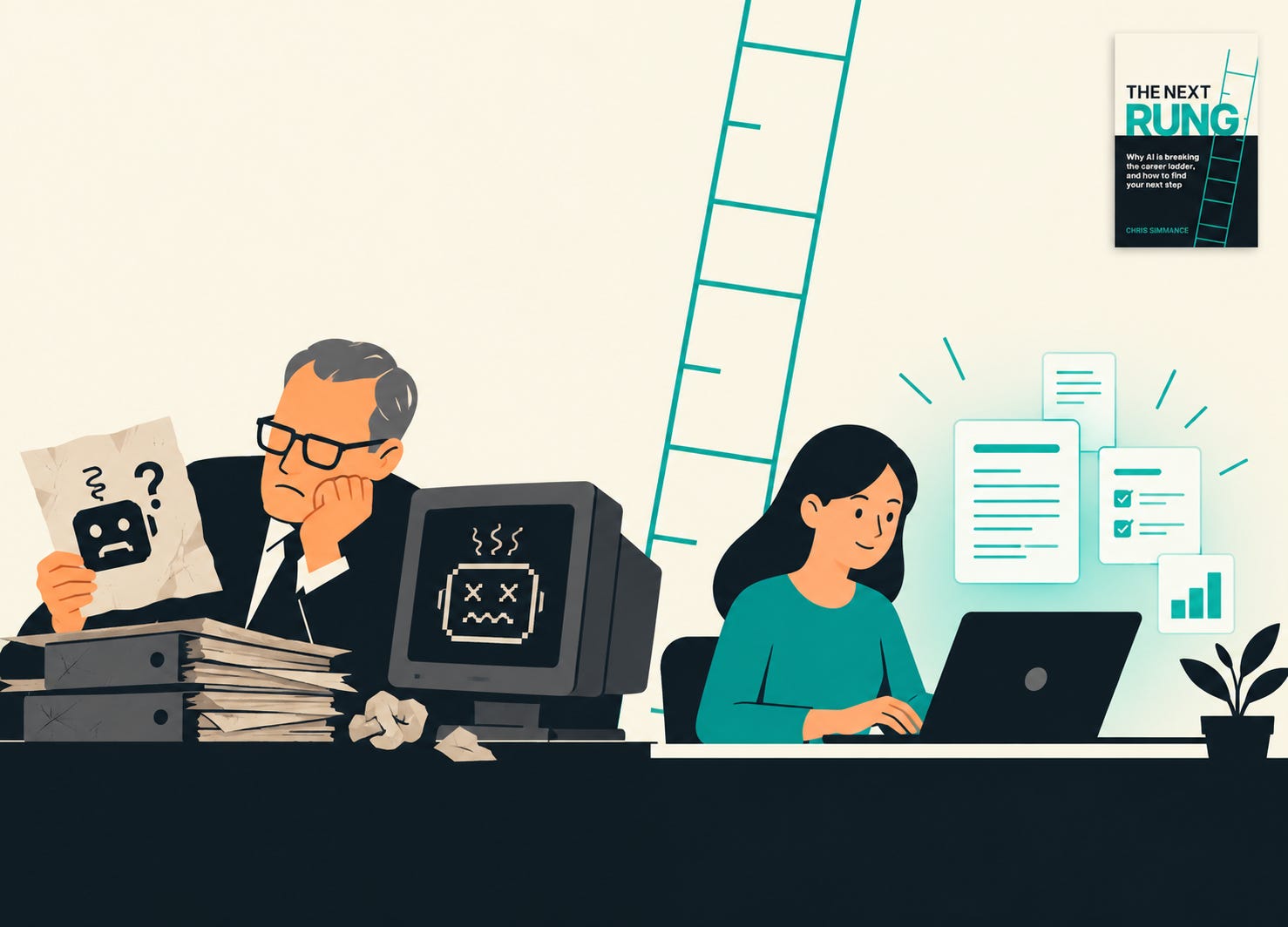
There’s always one. Somebody in the office, usually quite senior, usually good at their job, who tells the story about ChatGPT inventing a reference. A court case that never happened, or a journal article, or a quote from somebody who never said it, page number and everything. And everyone laughs, because it is funny, and then the conversation moves on and the verdict sort of stays exactly where it was put.
That story is from 2023. Maybe early 2024 if they got to it late. I hear it a lot, in boardrooms, at dinners, in the comments under pretty much anything I post, and it gets told in the present tense every single time. It makes things up. Made, really. It made things up, back then, the time you tried it.
What I think actually happened is this. You tried it once, maybe twice, on a quiet afternoon. It was the worst version of the thing you will ever use, and you couldn’t have known that at the time, because nobody tells you that about a first version. It got something embarrassingly wrong. You filed it. And nothing since has made you open the file again, because why would you, it’s filed, it’s done.
METR, a research group in California that tests these models for a living, published a paper in March 2025 tracking how long a task an AI system can be left alone with and still get right about half the time. On software tasks, which is what they measured, that length has been doubling roughly every seven months. Every seven months, for about six years. So the thing you tested in 2023 and the thing your colleague two desks down is quietly using this afternoon share a name and not a great deal else. (Do the sum from spring 2023 yourself. It isn’t a comfortable one.)
And the part people miss, which I think is the part that matters most, is that it didn’t get better at one thing. When a machine got better at welding, it got better at welding, and the welder went and did the bit next to the welding. This got better at reading and writing and summarising and checking and drafting and arguing back, more or less all at once, which is most of what an office does between nine and five. Chapter 1 of the book puts it plainly: “AI is not narrow. That is the structural difference.” Narrow tools leave you the work next door. General ones go next door as well.
I get why the reference story sticks, though. It’s a good story. It has a villain and a punchline and it lets everybody in the room off the hook for another quarter, which is a lot of work for one made-up court case to be doing. I’ve watched people tell it and then, in the same meeting, ask a junior to “just pull together” a summary that the junior is very obviously going to pull together with the same tool. I don’t think they noticed. I’m not sure the junior did either.
There’s a line in chapter 6 I keep coming back to. “At 99 degrees, water is still water. At 100, it is steam.” Nothing looks any different at 99, that’s the trouble with checking once. You dip a finger in at sixty, it’s warm water, you go back to your desk, and the bit where it changes state happens while you’re out of the room. Then you come back and somebody’s telling you it’s been steam for a while.
None of this is a dig at the people telling the story. They were right, in 2023. Being right once is a very easy thing to hang on to, and re-opening a verdict you’ve told at a dozen dinners is genuinely awkward, I’d find it awkward. But the verdict is about a tool that doesn’t exist any more, a version nobody’s using. Keeping it means you’re making decisions about your job, and your team’s jobs, on a test you ran on something that’s been replaced, what, several times over by now.
Chapter 1 of The Next Rung spends a while on why general matters more than good, if you want the longer version. It’s a paperback, out 19 January through Practical Inspiration Publishing, and you can pre-order it at thenextrung.co.
So tonight, if you’ve got ten minutes, dig out the exact prompt that failed on you in 2023. Same words, no tidying up. Give it to whatever’s on your laptop now and read what comes back.

The Next Rung is a book on how AI is quietly dismantling the middle of knowledge work, and what you can do about it before the market decides for you: pre-order it before it publishes in January.